LED sign manufacturing is not a single production step with an inspection at the end. It is a chain where each stage locks a decision the next stage cannot recover: artwork release fixes the shape, engineering fixes the build, fabrication fixes the tolerance, assembly fixes the light, and packing fixes what arrives. This is the sequence, with the documents that should exist at each gate.
Release artwork and engineering together
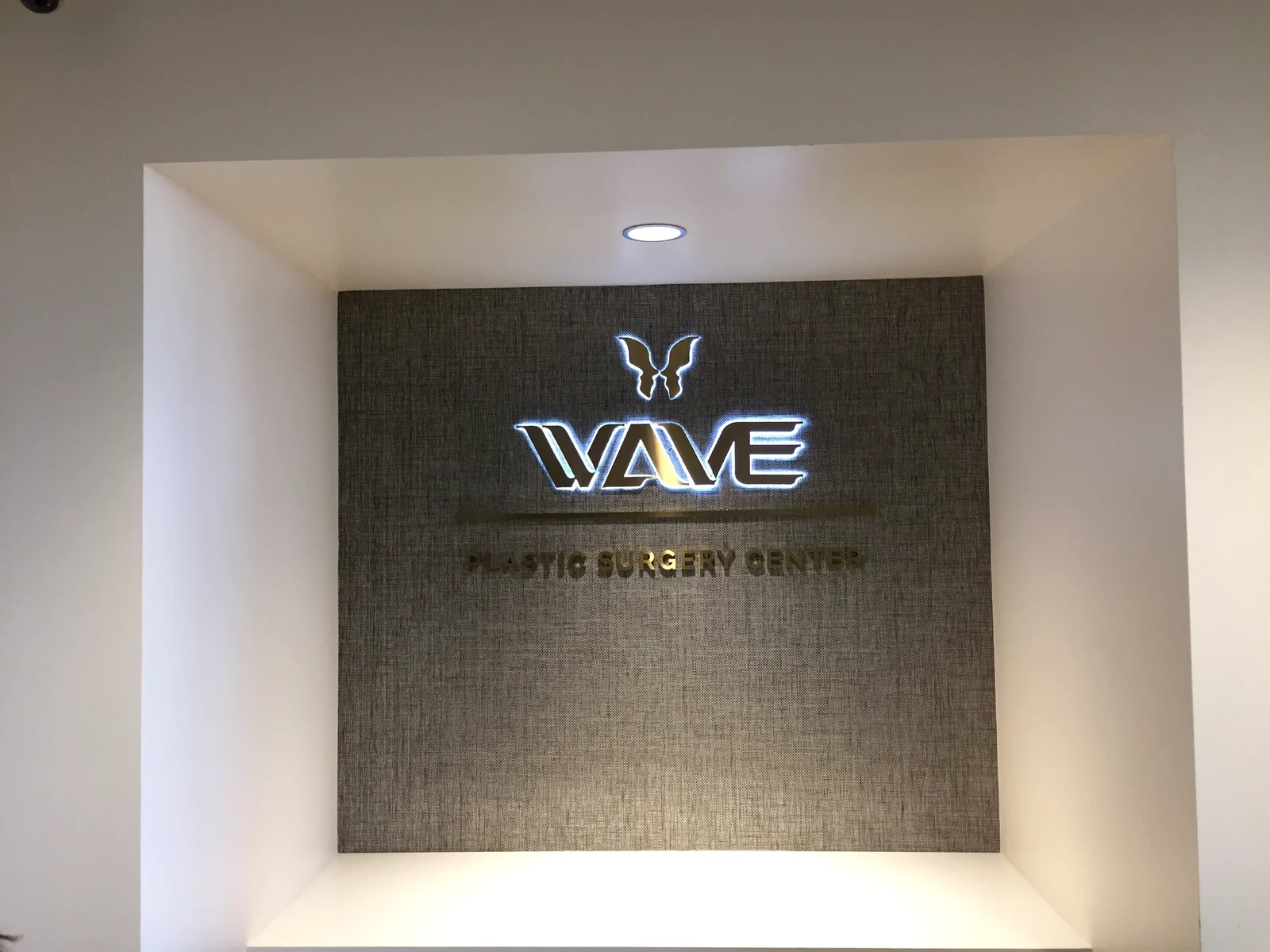
Artwork alone is not manufacturable. The engineering release translates it into dimensions, materials, illumination and mounting, and the two should be approved as one package. When they are released separately, the factory builds to a drawing the client has not seen, and the difference usually appears as a stroke that reads heavier or a letter that cannot be bent.
The release package should include the production drawing with a revision number, the material and finish schedule, the illumination layout, the mounting or template plan, and the packing list. Five documents, one revision, one approval.
Design for manufacture: the five things that change
Most artwork needs adjustment before it can be built. The five changes that come up repeatedly:
- Minimum stroke — a hairline in the artwork becomes a return that cannot be formed or a neon line that reads heavy.
- Bend radius — sharp corners in a script or a logo need a radius the material can actually take.
- Module clearance — letters too small to hold a module and its wiring need a different illumination approach.
- Mounting geometry — stud positions have to land on structure, not on a cavity.
- Split joints — large sets are sectioned for shipping, and the joint should not cut through a letter or a lit panel.
Each change should be marked on the production drawing, not handled verbally. A DFM note that lives in an email is a note that gets lost between shifts.
Fabrication
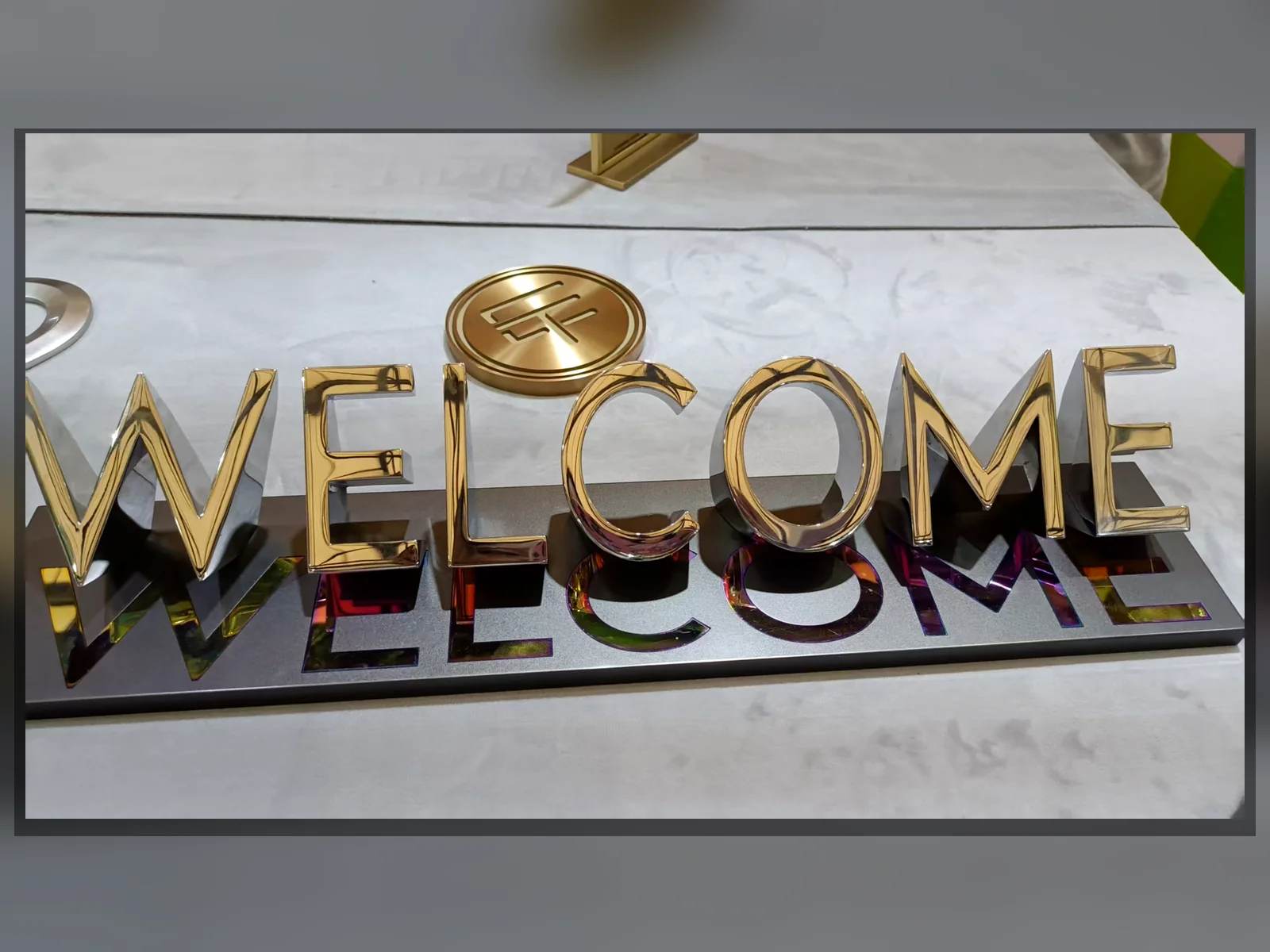
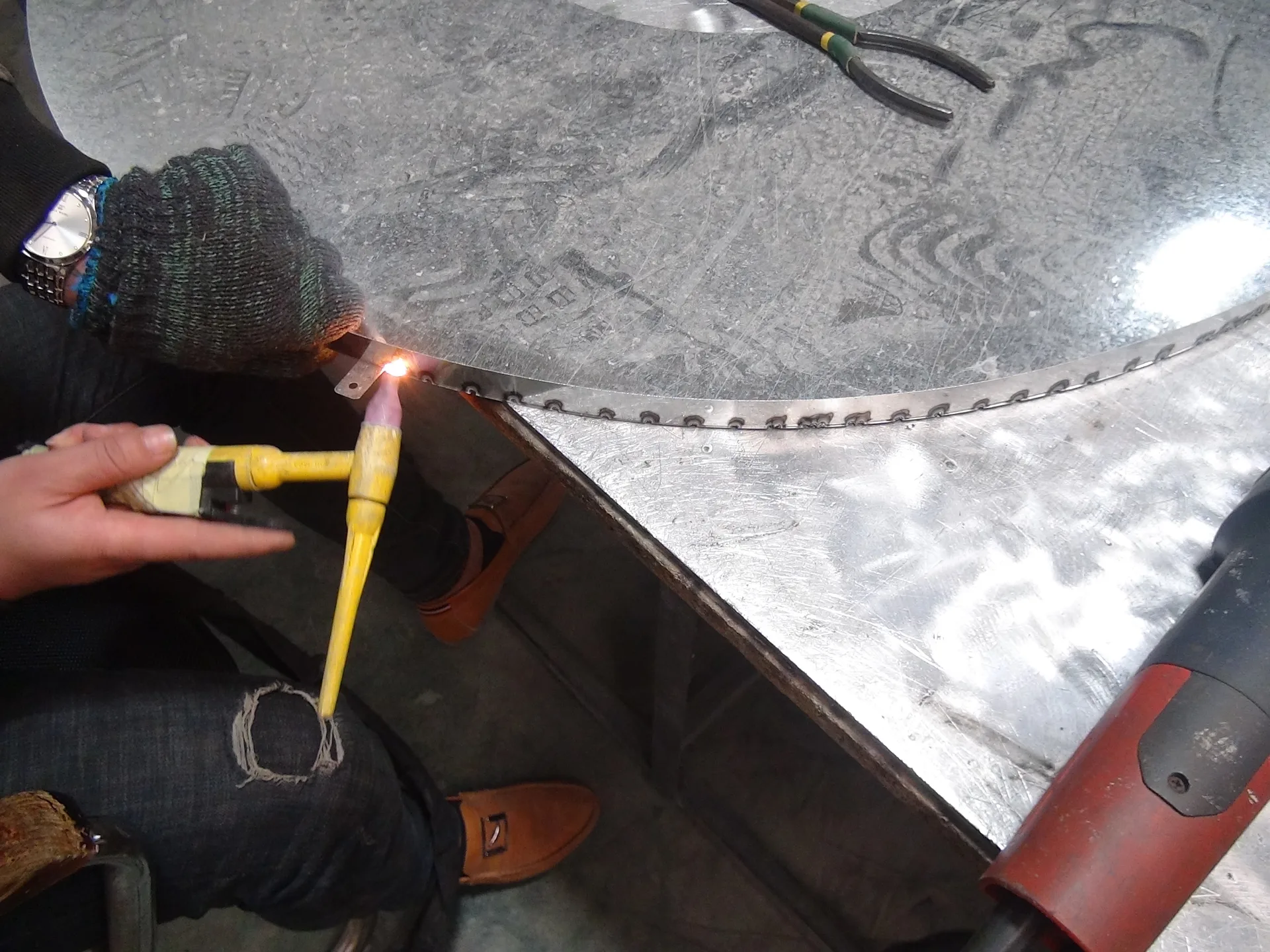
Fabrication covers cutting, forming, welding and finishing. For metal letters that means laser or CNC cutting, brake forming of returns, welding and dressing; for acrylic it means cutting, edge polishing and occasionally laminating for depth. Tolerances are usually a few millimetres on overall dimensions and about ±1 mm on stud positions, because a stud that misses its hole is a site failure, not a cosmetic one.
Dimensional letters add a specific discipline: the face, the return and the backing have to be built as one assembly with a defined depth, and the depth has to be stable enough that a row of letters reads as a row rather than a wave.
Illumination assembly
Modules are placed to the engineering layout, wired in labelled branches, and connected to drivers sized with headroom. Three numbers govern the result: the pitch between modules, the distance from the module to the face, and the load on each driver. Get any of them wrong and the sign lights, but not evenly.
Assembly is also where IP protection is decided. Glands, seals and the direction of cable entries are chosen here, and a sign that is sealed badly at assembly cannot be rescued by inspection later.
Burn-in and inspection
Every unit should run before packing — commonly 24–48 hours — to catch the failures that would otherwise appear in the first week on site. The burn-in is a screening test: it finds a dry joint or a failing module, and it does not predict a ten-year life.
Inspection then covers dimensions, finish, illumination evenness and labelling, each against the approved drawing and the golden sample. The records should state the method and the conditions, because “looks good” is not a record.
Schedule and the critical path
Production time is usually shorter than buyers expect, and the approval loop is longer. A single set built to an approved drawing commonly takes 3–7 working days; a multi-site programme takes longer because of batching and labelling, not because fabrication is slower per unit.
The critical path therefore runs through drawing approval and material confirmation, not through the workshop. When a schedule slips, it is usually because a revision arrived late or a face material was confirmed after fabrication started — both of which are pre-production failures, not production ones.
Change control after release
Every change after release should become a numbered revision with the affected components marked. The factory should stop and confirm before cutting, because a verbal change during fabrication produces a set that is half built to two drawings — and that defect cannot be inspected out.
Two changes are cheap before cutting and expensive after: a letter height adjustment and an illumination change. Both alter the section, the module count and often the mounting. A change of copy or colour within the same construction is comparatively simple, which is why the drawing should separate geometry from appearance.
Multi-site programmes
A programme of thirty identical sets is not one order repeated thirty times. It introduces a release sequence, per-site labelling, a colour-bin reservation and a first-article gate for each production run. Without those, the signs arrive in the right quantity and the wrong order, and the site that opens first receives the crate labelled for the last site.
Keep the drawing revision constant across the programme and put the site variation in the packing and label layer. That way the technical approval stays single and the logistics stay traceable.
Documentation and packing
The document set is part of the product: drawing revision, wiring schedule with branch IDs, driver list, template, maintenance notes and packing list. Packing protects the load path, keeps the face clear and labels every crate to its elevation.
A unit that ships without its documents forces the installer to reconstruct the factory's decisions on site, which is the most expensive place to do it.
Who signs at each gate
Each gate has a different signatory and a different question. Engineering release asks the buyer to confirm the shape and the site assumptions. First-article inspection asks quality to confirm the build matches the drawing. Burning-in asks production to confirm the unit survives. Packing asks logistics to confirm the crate matches the route.
When all four questions are answered by the same person in the same email, the gates collapse into one and the mistakes that should have been caught early arrive at the end. Naming the signatory per gate is a low-effort way to keep them distinct.
In-house or outsourced stages
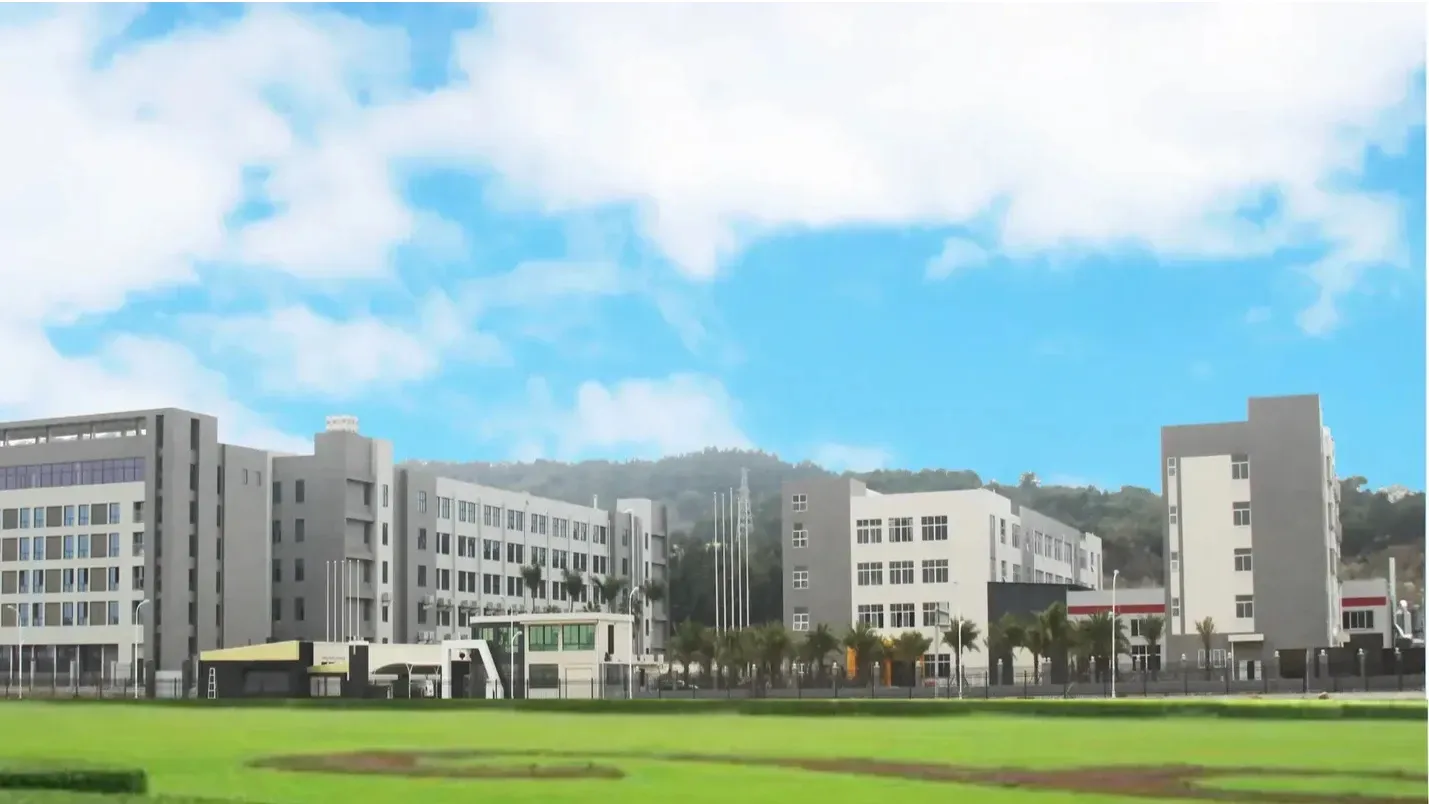
Most factories do not perform every stage themselves: cutting, forming, coating, acrylic work and electronics may each come from a different supplier. That is normal and does not reduce quality by itself, but it changes where the responsibility sits for a non-conformance.
The production drawing should record which stages are in-house and which are bought in, because a finish problem that originates at a coating supplier is resolved differently from one that originates on the factory floor. It also explains why some schedule commitments are firmer than others.
What photographs can and cannot prove
A photograph at the right stage is useful evidence: it shows a weld was dressed, a module row was placed, a crate was blocked. It cannot prove a colour match, a tolerance, or that the photograph was taken after the final adjustment.
Use photographs for traceability and measurements for acceptance. A stage-by-stage photo set with a measurement sheet behind it is a credible record; a photo set alone is a narrative.
Stage to evidence
| Stage | Decision locked | Evidence |
|---|---|---|
| Artwork and engineering release | Shape, materials, illumination, mounting | Approved drawing with revision |
| DFM review | Buildability and joint positions | Marked-up production drawing |
| Fabrication | Tolerance and finish | Measurement sheet, finish sample |
| Illumination assembly | Evenness, branch layout, IP sealing | Wiring schedule, assembly photos |
| Burn-in | Early failure screening | Run log with duration |
| Inspection | Conformance to drawing and sample | Inspection record with conditions |
| Packing | Arrival condition and traceability | Packing photos, labels, seal number |
Frequently asked questions
Is every production step visible in a factory photograph?
No. Photographs show what was staged, not what was measured. Treat them as traceability, and require the measurement record for acceptance.
How long does production take?
For approved drawings, a typical range is 3–7 working days for a single set, longer for large or multi-site programmes. The drawing approval, not the fabrication, is usually the critical path.
Who approves the production drawing?
The buyer or its representative, against the artwork and the site survey. The factory should not release fabrication on an unapproved revision, even under schedule pressure.
What happens if the drawing changes after release?
It becomes a new revision, with the change marked and the schedule re-confirmed. A verbal change during fabrication is how a sign ends up half built to two drawings.
Send the artwork, the site conditions and the mounting constraints, and the engineering release can be produced as one package. The channel letter manufacturing guide covers the letter-specific stages, and the manufacturer selection guide covers what a factory should be able to document.