Specify for the approach speed, not the showroom
A shopper walking past a storefront reads a 200 mm letter comfortably. A driver at 80 km/h on a six-lane arterial does not. The working rule is roughly 25 mm of letter height for every 3 m of viewing distance at walking pace, and that rule has to be corrected upward as speed rises and attention falls.
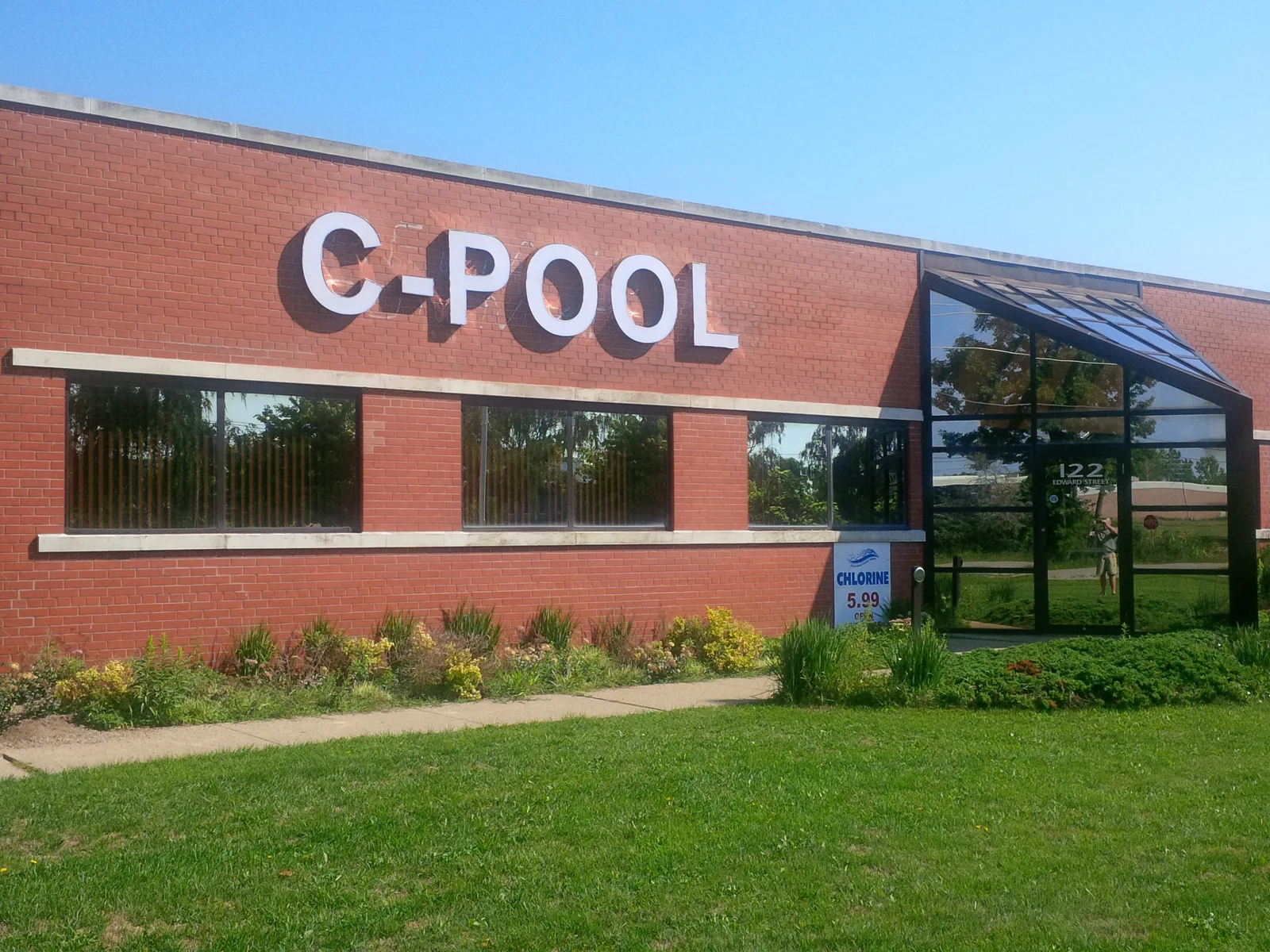
In practice, dealer fascia wordmarks land between 600 and 1,500 mm, with pylon and monument signage larger again because the approach is longer and the sign competes with roadside clutter.
Two things follow from that. First, the brand lock-up often has to be re-proportioned rather than scaled: a horizontal logo that reads well on a business card becomes a thin ribbon at 300 m. Second, if the fascia band cannot carry the height the wordmark needs, split it into two lines instead of shrinking it. A short sign that is legible beats a long sign that is not.
Brand colour is a lighting problem as much as a paint problem
Dealer brand standards are usually strict about colour, and the failure mode is rarely the paint. It is the light. A white face illuminated by a warm-white module reads cream; a brand blue behind a low-CRI module goes grey-green. The paint chip and the LED have to be approved together, under the sign's own light.
What has to be fixed before a dealer drawing is released:
- The brand colour reference as a physical chip or a documented Pantone, not a screenshot.
- The approved CCT for white faces - and one CCT per brand, applied across every site.
- The LED model and bin recorded on the drawing, so site two matches site one instead of approximating it.
- A photograph of the approved sample illuminated, kept with the project file.
This is the same discipline that makes a reorder possible. A dealer group that runs five rooftops will reorder faces and drivers for a decade; the record made at site one is what keeps those replacements consistent.
Related: lighting technology comparisons are irrelevant here, but finish inspection is exactly the control that catches a colour drift before shipping.
Front-lit, halo-lit or both
Front-lit letters light the face and read as a solid block of brand colour. On a dealer fascia this is the default, because the job is recognition at distance in daylight, and a bright face does that better than a silhouette.
Halo-lit letters light the wall behind them. They suit premium marques, dark stone or metal cladding, and buildings where the fascia is close to residential units and glare matters. They also photograph better, which matters more to a dealer than to most buyers.
Dual-lit - face plus halo - is the flagship answer: daytime presence, night-time depth. It costs more, needs two circuits, and should be specified only when the building justifies it. If you go that way, keep the circuits genuinely separate so the halo can run after the wordmark dims for the evening.
Mounting on tilt-up, precast and canopy fascias
Dealer buildings are typically tilt-up concrete, precast panels or a canopy over the service drive. That changes the mounting decision more than the lighting does.
Tilt-up and precast accept penetrations, but the panel joints and the reinforcement layout decide where. Letters mounted flush must land on solid panel, not on a joint, and the fixing design belongs to the local engineer.
Canopy fascias are often shallow and metal-clad, which pushes the job toward a raceway: an aluminium box fixed to the structure with all wiring inside, letters sitting on top. It costs more in material and looks slightly heavier, but it avoids drilling a soffit that was never designed for it.
Pylon and monument structures are engineered, not fabricated to taste. Wind load, foundation and sectioning are local engineering scope; our part is the letter set, the cabinet faces and the shipping plan that gets a large structure to site in sections.
Where the requirement is unclear, the drawing should show the mounting interface and state who is responsible for verifying the substrate. A factory cannot confirm a wall it has only seen in a photograph.
Night-time performance and glare
A dealership sign runs twelve hours a day and is judged mostly after dark, when the lot is lit and the competition across the road is lit too. Two practical consequences follow.
Brightness is relative. A sign specified to look strong in daylight can look washed out beside a brighter neighbour, and the fix is not more modules - it is a face with the right diffusion and a return deep enough that the light spreads before it leaves. Over-driving a shallow letter produces hot spots at night and a face that ages faster.
Glare has a neighbourhood cost. Dealer pads are often beside residential or mixed-use buildings, and a high-output front-lit set aimed at a bedroom window generates complaints and, occasionally, a dimming order. Halo-lit construction and a night-time dimming circuit solve this better than reducing the letter size.
If the site has an existing lighting scheme or a landlord illumination limit, put it in the brief. We can specify a dimmable driver and a lower-output module at drawing stage; retrofitting after installation means new drivers, new wiring and a second site visit.
Multi-franchise groups: one drawing register, not one folder
A dealer group with four brands and six rooftops does not have one signage project. It has a matrix, and the failure mode is a letter height or a colour that drifts between sites because every site was treated as a new job.
Three controls keep it consistent:
- One released drawing per brand, with a revision number and a change log, reused across sites. The site drawing references it rather than redrawing the logo.
- A site schedule listing address, fascia dimensions, permitted sign area, mounting type and electrical interface for each rooftop.
- A carton map per site, because six sites shipping together will otherwise produce six sets of identical labels.
This is the same mechanism used for retail rollouts; see multi-location signage programs for the control structure and shop drawings for what to check before each site is released.
What a dealership brief has to fix
Five items fix a dealer specification:
- The brand lock-up as vector artwork, plus the approved colour reference.
- Site photo with a known dimension, or the fascia drawing with letter heights.
- Which brand or brands are on the site, and whether each needs its own CCT and colour.
- Mounting condition: tilt-up, precast, canopy or structure, and whether penetrations are permitted.
- Destination and installation responsibility, including who connects the sign and who signs off the site electrical work.
The lock-up decides letter proportions; the mounting condition decides the fixing design; the destination decides packing. None of the three can be assumed at drawing stage without revisiting the drawing later.
For the full file list, see what files are needed for a channel letter quote.