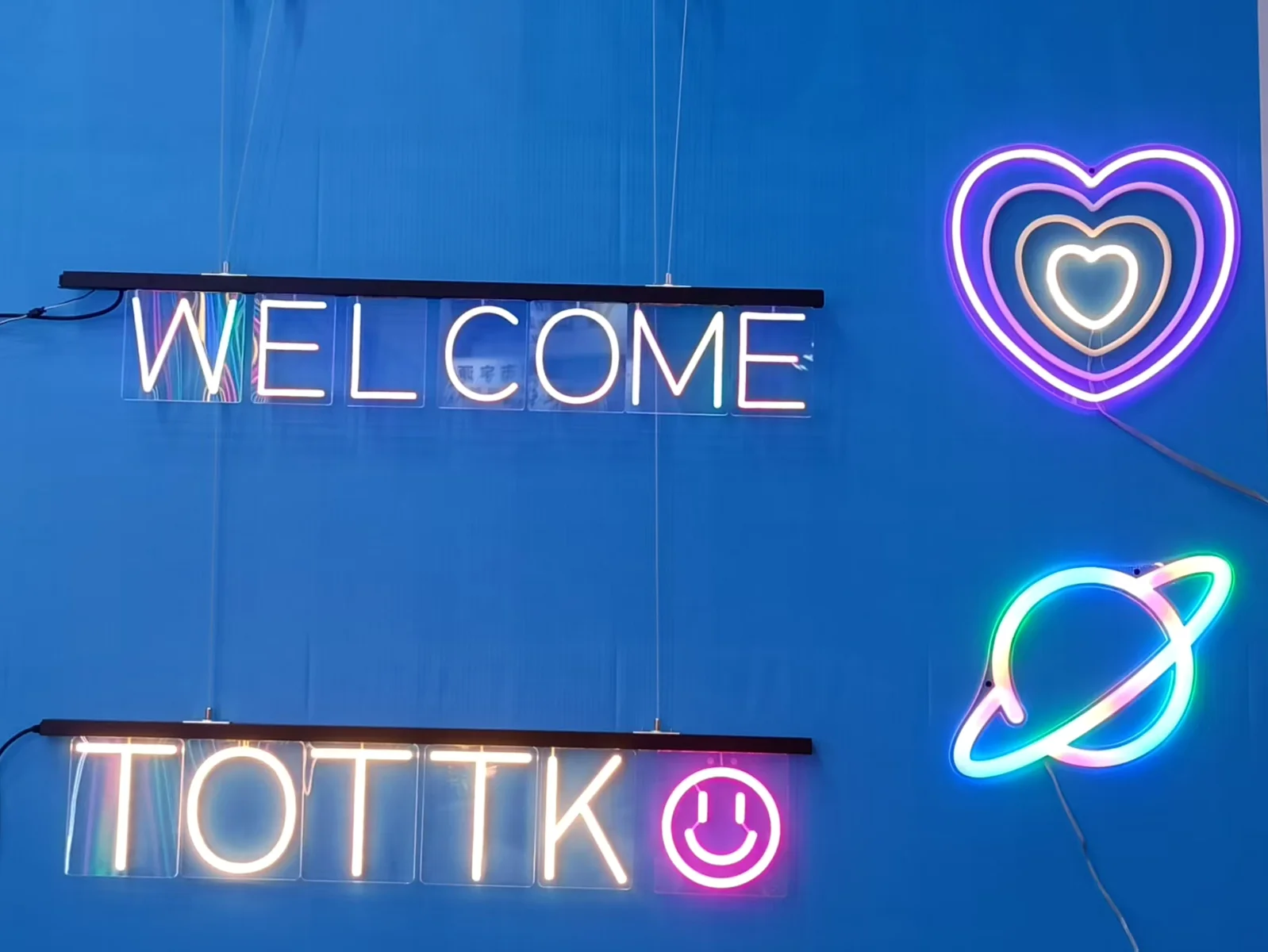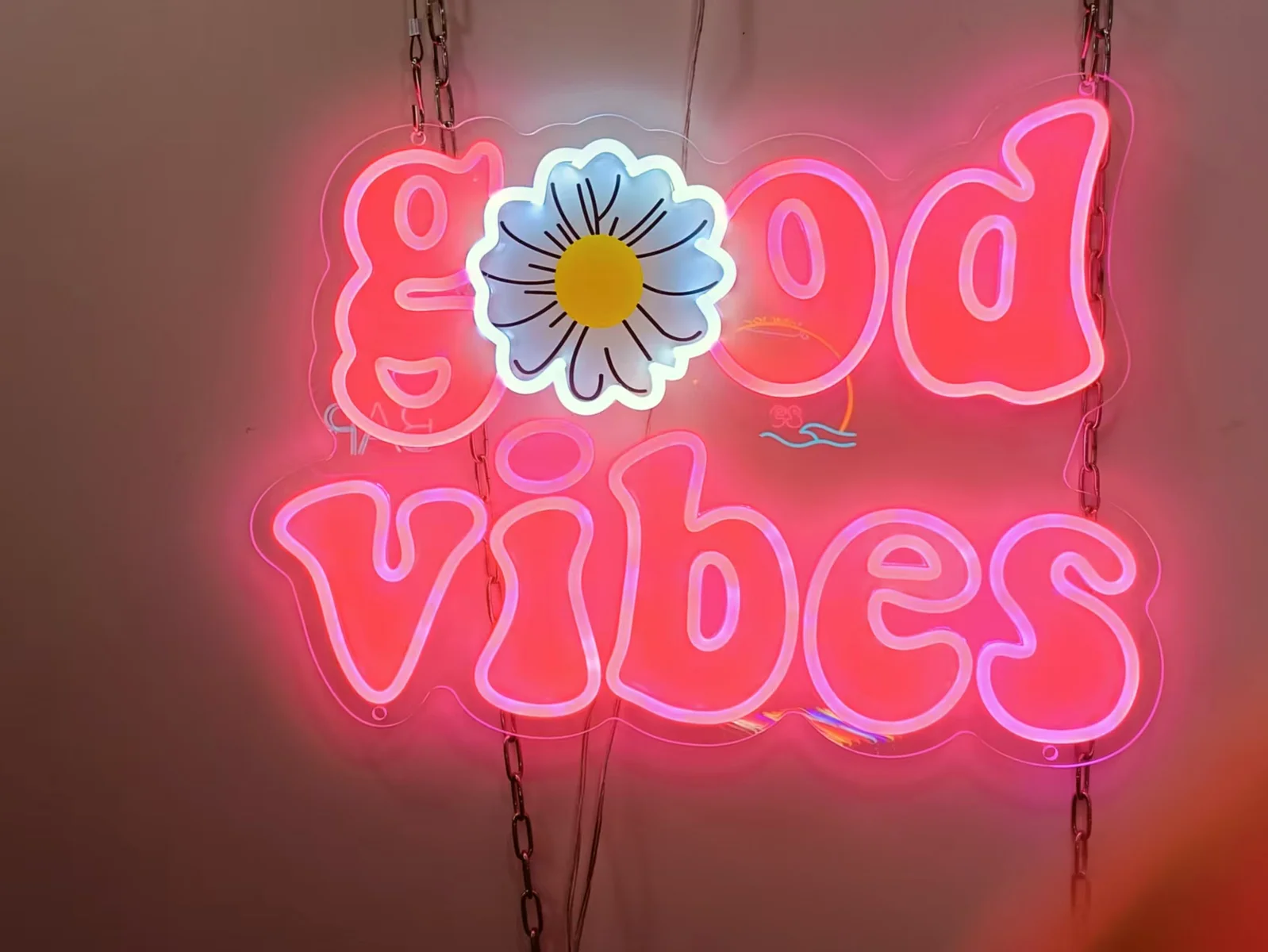
LED neon or glass neon: what a bar actually gains
Glass neon is the original and still the reference for a certain kind of red: a deep, saturated tube that reads as heat rather than as a coloured light. It also runs at high voltage, is fragile in a room where people lean and staff carry crates, and in most cities cannot be repaired quickly - a broken segment means a dead sign for weeks.
LED neon in a silicone or PVC profile gives a very close line at 24V, bends tighter than glass, dims smoothly, and can be repaired segment by segment. The trade-off is line quality: a 6 mm LED profile reads finer and more graphic than a 15 mm glass tube, and the silicone diffuser softens the core so the light looks even rather than hot in the middle.
For interiors we almost always build in LED neon, and use glass only when a client specifically wants the old tube look and accepts the maintenance. Where the design depends on a true deep red or a warm orange, the LED profile is specified in that colour rather than mixed from RGB - mixed colour cannot hold that saturation at low output.
This page covers the interior. For the illuminated facade that gets people through the door, see channel letters for bars and nightclubs.
The back bar: what the sign competes with
A sign over the back bar is read from 1-6 m, over the bartender's head, against a wall of bottles that is often lit from below. Two things go wrong there. First, the sign becomes the brightest object in the room, and every guest seated facing it spends the evening looking at a light source instead of the room. Second, if the bar has a mirror back, the sign appears twice, and the second image is usually at an angle that lands directly in someone's eyes.
The fix is lower output and a warmer white than the rest of the room: 2700-3000K at 40-60% of what feels right in a test, with the face of the letters dark and the light on the wall or the backer. If the bottles are already lit, the sign should be dimmer than them, not brighter - the bar's own display is the visual anchor.
Position matters too. A sign centred at 1.8-2.2 m sits above most seated heads and below the shelving line; a sign at 1.4 m is at eye level for a seated guest and becomes a glare source no matter how it is lit.
Hanging it: structure, clearance and the ceiling you did not design
Bar ceilings are rarely tidy: exposed brick, ductwork, sprinkler runs, a listed cornice, and lighting track installed by someone else. A suspended neon sign has to hang from something that can actually carry it, and the load is not trivial once the frame and backer are included.
Three rules we apply. Never hang from a sprinkler pipe or a duct - both are prohibited and both will be found by an inspector. Use a frame or a pair of chains rated for several times the sign weight, with a ceiling anchor into the structure rather than into a plasterboard ceiling. And keep the bottom of the sign at least 2.1 m above the floor where staff walk with crates, higher over a service route.
Cable routing is the detail that ruins the look: a visible 24V lead dropping from a suspended sign reads as unfinished. The lead should run inside the backer or behind a chain, and the adapter should sit in a serviceable place - not on top of the sign where nobody can reach it, and not behind the bar where a spill can find it.
Grease, smoke and the closing-time wipe
An interior bar sign gets cleaned by whoever is on close, with whatever cloth is nearest. That is usually a degreaser, because the same cloth is used on the bar top. Some of those products attack acrylic: solvent-based degreasers and anything with acetone or a strong aromatic will craze a clear backer within a few applications, and the damage appears as a haze that no polish removes.
Cast acrylic and a silicone neon profile survive mild soap and water, alcohol-based sanitiser and most neutral cleaners. The instruction that ships with the sign should name the exception in the same list a bar manager will actually read - a line on the cleaning sheet, not a paragraph in a manual.
Smoke is the other slow factor. A sign in a room with cigarettes, fryers or a kitchen pass collects a film that cuts output before the LEDs age, and the film is uneven because it settles on the flat backer rather than the tube. A twice-yearly wash in the maintenance schedule is worth more than a higher-output module.
Dimming, and the 1am problem
Bar lighting is a slow fade, not a switch: pendants down at 23:00, candles lit at midnight, the room warmer and darker by 01:00. A neon sign on a fixed supply stays at the same brightness all night and by then it is the brightest thing in the room.
A trailing-edge dimmer or a 0-10V input lets the sign follow the room. Two practical notes: cheap leading-edge dimmers make LED neon buzz and flicker at low levels, which is audible in a quiet bar; and dimming to 10% on a saturated colour turns it into a dull ember rather than a glow, so a sign that is meant to stay readable late should be sized for that level rather than dimmed from full.
Where the room has colour-changing lighting, the neon can share a DMX scene, but the sign should have its own default and its own switch. A sign that only works when the lighting console is on is a sign that is dark on the night the console fails.
The wall people photograph
Half the value of an interior neon sign is the photographs taken in front of it, and that is a specification question, not a marketing one. A phone camera exposes for the brightest thing in the frame: if the sign is much brighter than the faces in front of it, the people become silhouettes. If the wall behind is glossy, the flash bounces and the sign disappears into a white rectangle.
The workable combination is moderate output on a matte or textured wall, a sign centred at 1.6-1.9 m so a standing person's head sits below or beside it, and enough clear wall around the shape that two people can stand in frame without cropping the sign. A backer panel with a hidden cable and a switch nearby finishes the job - guests will move the sign if the cable is in the way.
On a dark-painted wall, pink, red, amber and lime photograph well; deep blue and violet go almost black in a phone exposure and look like a fault. On a pale wall the same colours wash out, and a mirror backer gives the sign a second life in the reflection without adding another light source.
Where the site is a multi-use venue rather than a bar - a live room, cinema, arcade or event hall - the wider specification, from light levels to show control, is covered in signage for entertainment venues.