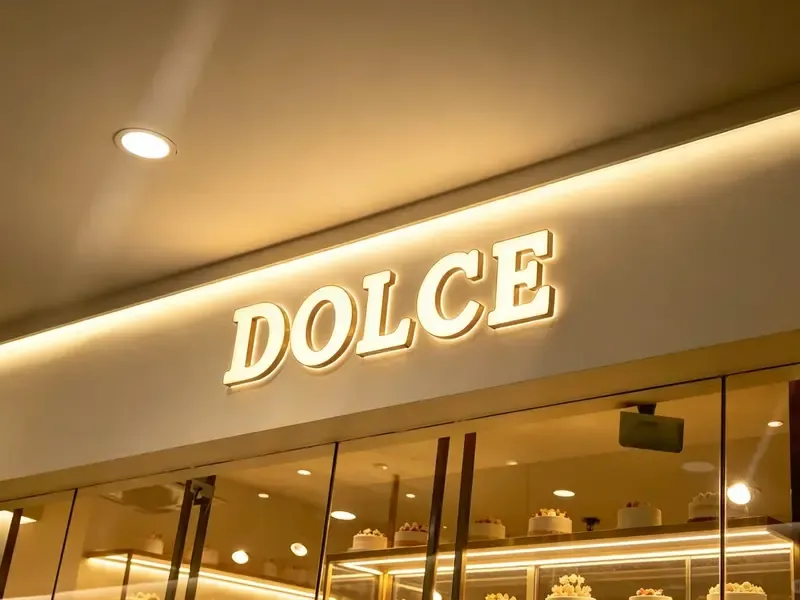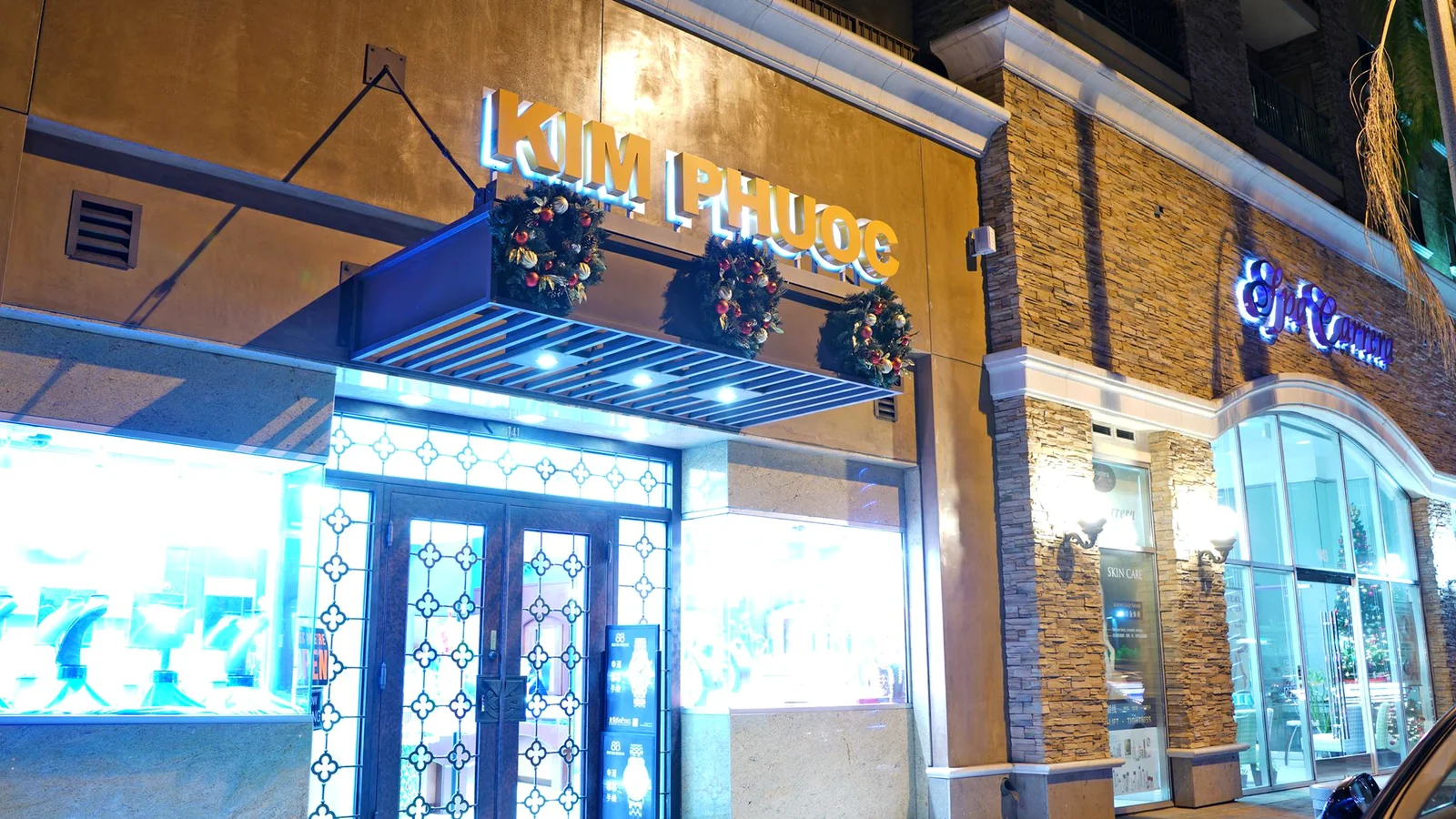
Trim cap or trimless: the edge detail that sets the price bracket
Trim cap letters have a colored plastic or metal edge returned around the acrylic face. It hides the seam, protects the face edge, and makes face replacement easy - the face pops out and a new one goes in. This is the default for most retail chains because it survives damage and is cheap to service.
Trimless letters bond the face directly to the return with no visible edge. The result is a cleaner, more premium silhouette, and it photographs better. The trade-off is serviceability: replacing a face means replacing the letter, so trimless is usually specified for flagship stores and premium brands rather than 200-store rollouts.
If the brand guidelines do not say, ask what happens when a store gets hit by a cart. That answer decides the spec faster than any design argument.
If the letter height still looks generous or tight on the drawing, the working numbers are collected in the commercial sign size guide - distance, approach speed and contrast.
Color accuracy is the whole sign in retail
A supermarket fascia in the wrong red looks counterfeit. Three controls keep color consistent:
- Single paint formula per project. We record the formula and spray every batch against a master chip, so a reorder 18 months later still matches.
- Pantone on both face and return. A common failure is matching the face but painting the return a generic black or white.
- LED color temperature stated in Kelvin. A 6,500 K module behind a warm red acrylic shifts the color visibly. Specify the module CCT, not just 'white'.
Mall and landlord rules that delay rollouts
Most retail rollouts lose time in approval, not production. The recurring requirements:
- Maximum letter height and total sign area, often expressed as a percentage of the fascia
- No visible raceway - letters must appear to float, which means concealed mounting
- Illumination curfew, typically sign off or dimmed after mall closing
- Approved contractor list for electrical connection on site
- Landlord sign package submission with drawings, electrical load and color chips
We can produce the drawing package in the format most US and EU landlords expect, which shortens the approval loop considerably.
Multi-store rollouts: how to keep store 40 identical to store 1
Rollouts fail on three things: color drift, dimension drift and freight sequencing. The controls that work:
Freeze the drawing. One approved drawing per sign type, revision-controlled. Every store order references that revision, so a store opening in year two is not quietly redesigned.
Batch by sign type, not by store. Producing all fascia letters for 10 stores in one run keeps the paint batch and the LED batch identical. Producing store by store introduces variation.
Sequence the freight to the opening schedule. Crates are labelled per store and per wall, so the install crew opens only what they need that week.
Daytime brightness and nighttime restraint
Retail letters are sized for daylight, which makes them very bright at night. Two adjustments keep both readings acceptable: a higher-density LED layout for daytime contrast, and a photocell-driven dimming step after closing. Where the fascia faces residences, the dimming step is usually a planning condition rather than an option.
For window graphics and interior brand walls, the same letters work at lower output - interior letters are typically specified at 30-40% of the exterior module density.
Fascia brief checklist before production
Five items settle a retail fascia specification:
- Vector logo, with brand colour references (Pantone or CMYK plus a physical sample photo)
- Fascia dimensions and the maximum letter height allowed
- Trim cap or trimless decision
- Mounting method, or the landlord's mounting requirement
- Number of stores and the opening sequence, if it is a rollout
A rollout is specified per sign type rather than per unit, with a per-store installation kit, so that any two suppliers are compared on the same basis. The store count matters because it decides whether the paint batch and the LED batch can be shared across the run or have to be repeated per site.
Window, brand wall and interior retail
Retail chains buy facade letters once and interior graphics many times, because window campaigns and brand walls change with the season. Treating them as one product category is how a chain ends up with a bright facade and a washed-out interior wall.
Window light boxes versus vinyl. An illuminated window box gives depth and reads at night; printed vinyl gives colour fidelity and can be changed in an afternoon. The choice is usually commercial rather than technical: a box is bought once and re-faced, vinyl is reprinted each campaign. Both have to solve glare onto the street and reflection in the glass.
Interior brand walls. Halo letters on a dark wall read as premium at close range, but only with a module pitch low enough to avoid hot spots at a metre. Unlit dimensional letters on a light wall rely on ambient light, and their shadow pattern changes with the shop lighting design, which is often decided after the sign is specified.
Aisle and category signage. Wayfinding inside a store is a changeable-graphic problem: frames and rails rather than letters, because the content changes and the geometry does not. Specifying a light box for content that will be replaced six times a year is the wrong instrument.
Consistency with the facade. The interior wall and the fascia should share a colour reference, a module CCT and a face grade. Where they diverge, the interior looks like a different brand under shop lighting, which is the failure customers notice without being able to name.
What fails first in a chain, and what to keep in stock
In multi-store retail, failures are repetitive and therefore predictable. The list is short.
- Impact damage on faces. Trolleys, delivery cages and cleaning equipment hit the lower letters. A trim-cap face is a swap; a bonded face is a new letter and a new paint match. This is why trimless tends to stay on flagship stores rather than on a two-hundred-store estate.
- Colour drift between batches. The same Pantone sprayed in two production runs, months apart, will not match unless a master chip was kept and used. Store 40 looks wrong next to store 1 for reasons nobody can photograph.
- Module bin changes. A replacement module with a different bin makes one letter read cooler than its neighbours. Keeping the bin and model in the project record is what prevents that.
- Driver failures after five years. Drivers age faster in enclosed raceways in hot climates. Accessible mounting and a recorded model turn a service call into a parts swap.
- Cleaning damage. Abrasive cleaning dulls powder coat and scratches acrylic. A written cleaning instruction, kept with the store handover pack, prevents most of it.
A practical estate kit is modest: a few faces for the most exposed letters, a handful of modules of the recorded bin, one driver of the recorded model and a colour chip. Held centrally, it covers the first failures without a new production run.