
Product Guide · Oct 2026
LED Neon vs Glass Neon: Which Should You Choose?
LED neon matches the look of glass neon but is safer, more energy-efficient and lasts 50,000+ hours. Compare brightness, durability, cost and best use cases.
LED neon has largely replaced traditional glass neon in commercial signage, but both options still have their place. Here's a practical comparison to help you decide.
Safety
Glass neon runs on high-voltage transformers (around 15,000V) and contains fragile glass tubes filled with neon or argon gas. LED neon operates on 12V DC — no transformer, no gas, no risk of breakage during shipping or installation. For retail, restaurants and high-traffic spaces, LED neon is the safer choice.
Energy Efficiency
LED neon uses roughly 70-80% less power than glass neon. A typical 1-meter LED neon sign draws 15-20W, while an equivalent glass neon sign uses 60-100W. Over a 5-year lifespan, the electricity savings alone can cover the cost difference.
Durability
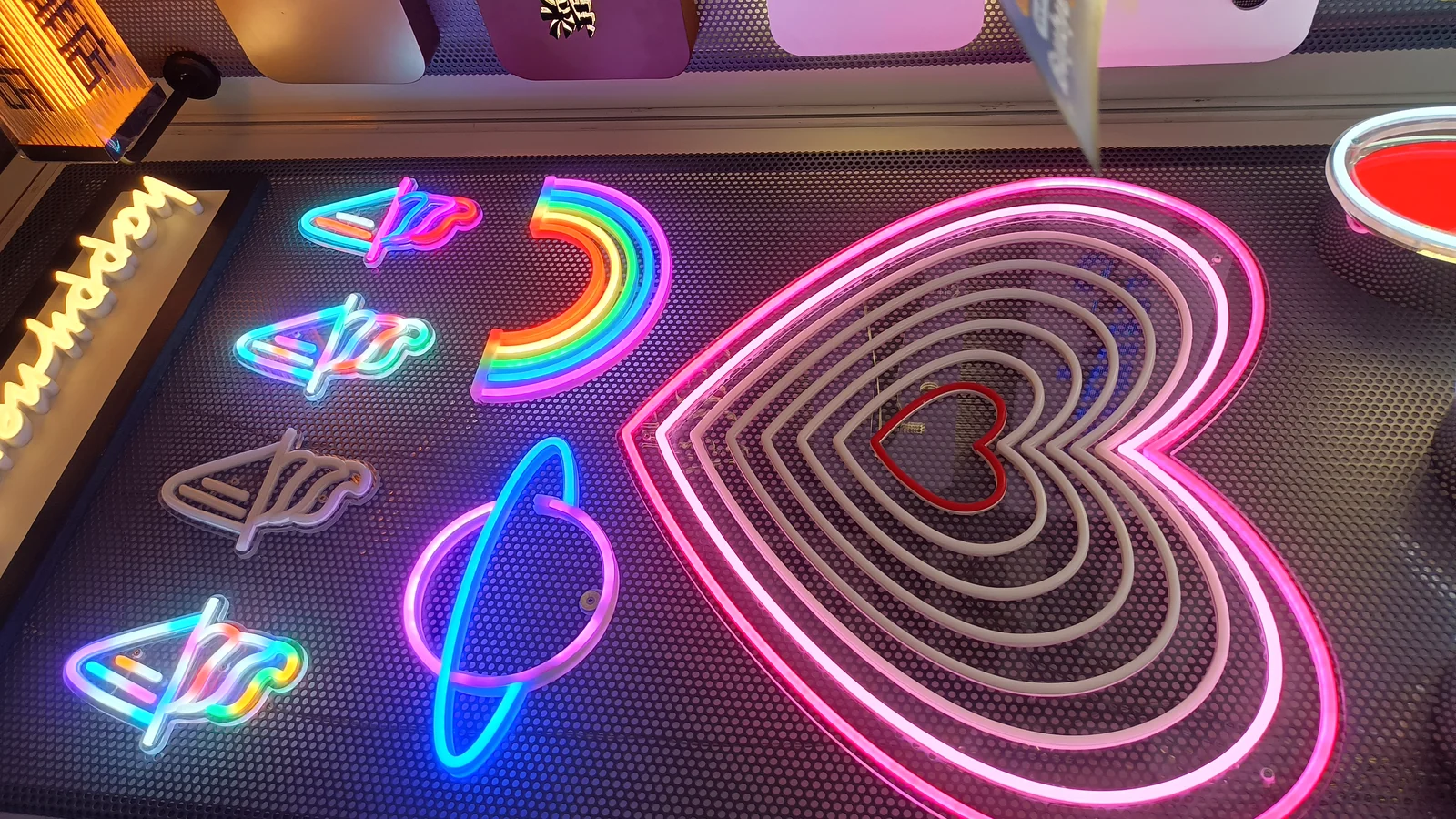
LED neon tubing is made of flexible silicone with embedded SMD LEDs. It's shatter-resistant and can withstand outdoor weather. Glass neon tubes break easily during transport or installation and require careful handling.
Cost
LED neon signs are typically 20-40% cheaper than glass neon equivalents. The savings come from simpler manufacturing, lighter shipping and easier installation. Glass neon requires specialized glass bending and high-voltage wiring.
Which Should You Choose?
Choose LED neon for most commercial applications: storefronts, restaurants, reception areas, events and indoor branding. Choose glass neon only for specific art installations or nostalgic aesthetics where the authentic tube glow is required.
Have a Project in Mind?
Send us your drawing or dimensions for a factory-direct quote within 24 hours.
Request a Quote